Principle of Utility
Contrasting Kantianism, utilitarianism focuses on the consequences rather than the intent of the actions. It treats intention as as irrelevant. Utilitarians would argue that actions should be measured in the happiness, or pleasure they produce. Thus to maximize happiness and minimizing harm/unhappiness, should be the philosophy accepted. Kant defines this as hypothetical imperative to hedge the issue as a determinist could argue that every action is inherently circumstantial. This provides the most ‘utility.’ This would make utilitarianism a hedonistic but not egoistic ideology. (Hedonistic = maximizing pleasure/minimizing pain, Egoistic = (self maximization) - as utilitarianism is often about maximizing the pleasure of the greatest denominator of people) This results in sacrificial, altruistic, martyr ideologies but is more so other-regarding instead of anti-egoistic.
We should act always so as to produce the greatest good for the greatest number.
Critiques
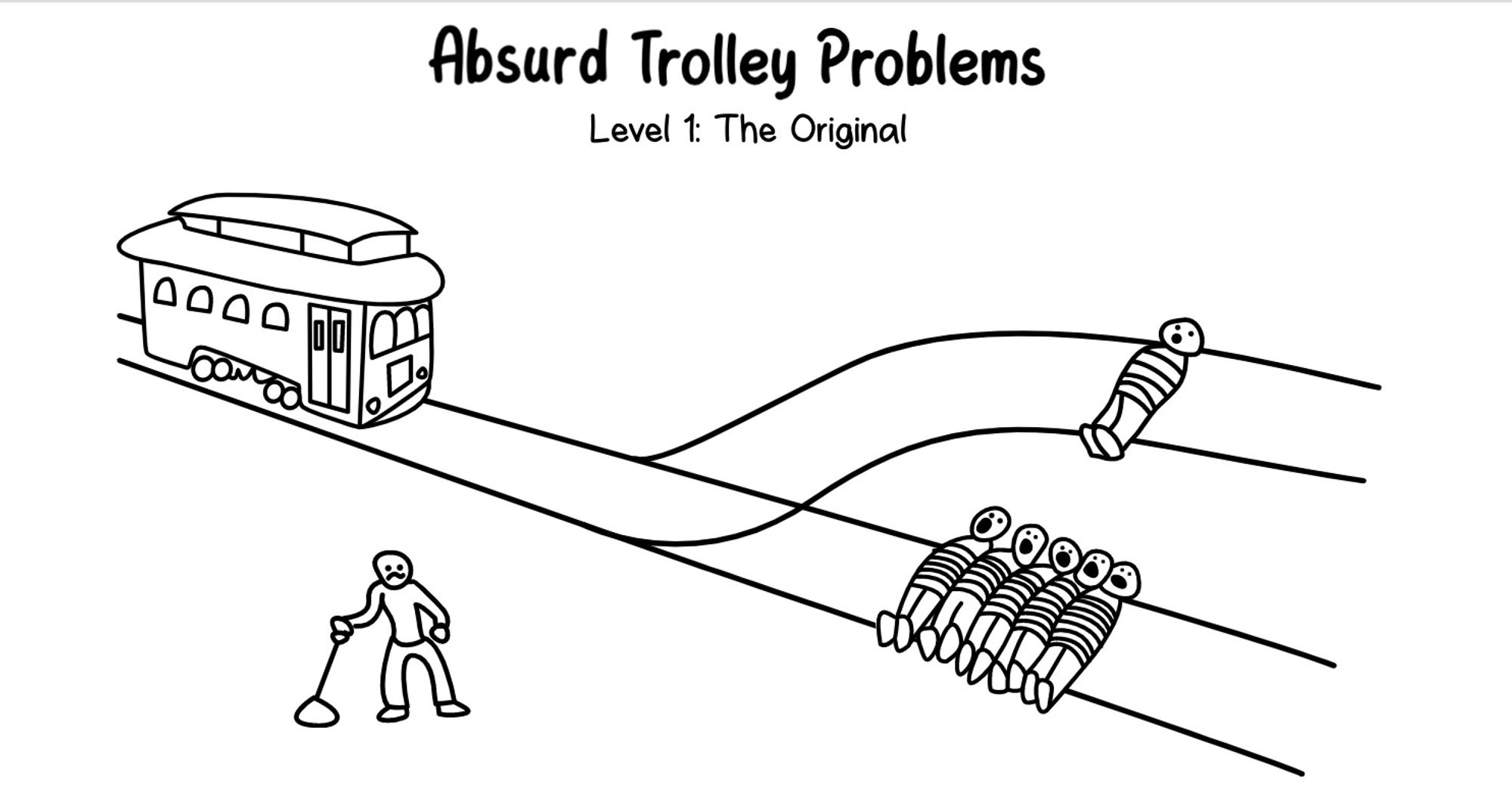
Trolley thought experiment
Surgeon thought experiment
Five mortally ill patients are in care at a hospital, all of whom will soon die. At the same time, a sixth man is undergoing a routine checkup at the same hospital. A transplant surgeon in residence finds that the only medical means of saving the five ailing patients would be to slay the sixth and transplant into them his healthy organs. Legal ramifications and other peripheral matters disregarded, it morally right to do so?
Act (Classical) Utilitarianism
In any given situation, you should choose the action that produces the greatest good for the greatest number: this is what has already been discussed. Things like age, difference in skill set and marketability in a capitalist system are all taken into account under act utilitarianism.
Rule Utilitarianism
Utilitarianism with a few absolutes, integrating some categorical imperatives to fend against criticisms of act utilitarianism: For the surgeon example, the mass harvesting of organs would be absurd. Under Kant’s universalizability principle, living in a society where people can randomly be harvested for organs sets a bad standard. Long term, mass harvesting of organs does not maximize pleasure.