2024-07-2411:57:
(Post)modern Art
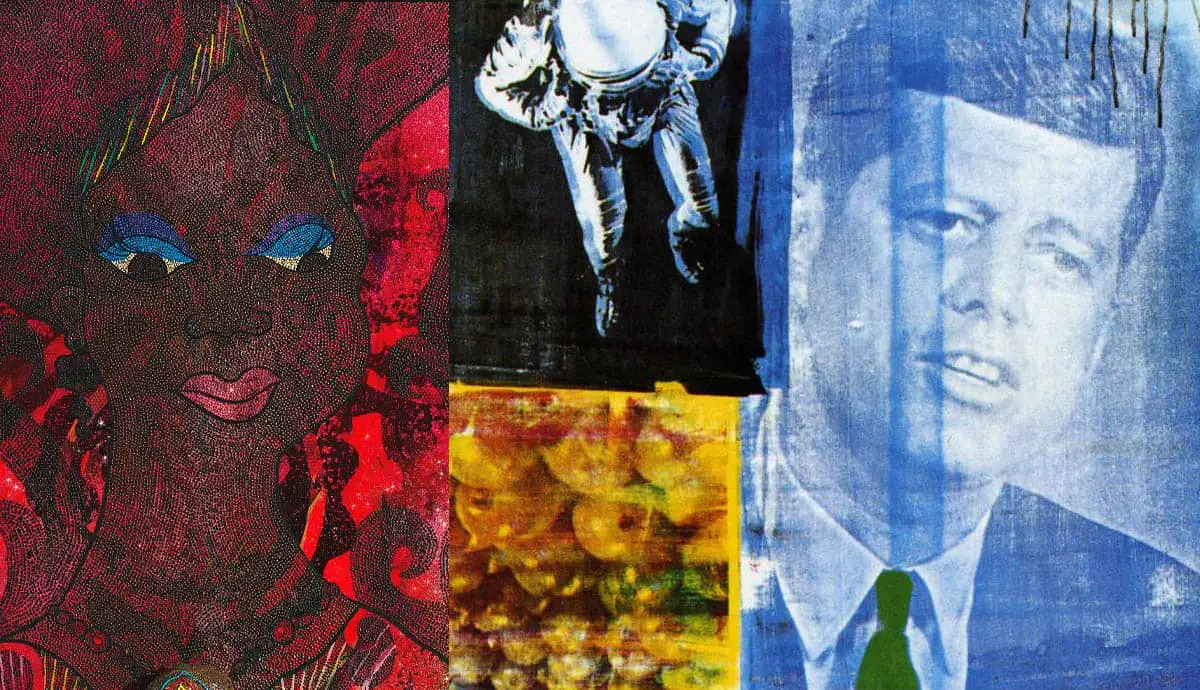
**Until this point, it has been very easy to tell a Renaissance piece from a Romantic one - a Gothic piece from Pop art but the lines between styles have been looser and looser as communication and the sharing of art has become more prominent. Although there are more eras and movements such as neo dada and neo expressionism, as we approach the 21st century movements become less cohesive. The era that we have been in since ABOUT 1990, is by far the most confusing era to characterise. Partly due to the fact that we are still experiencing it but also because of the delocalization of art - through the internet there are so many sub movements styles etc. This also implies that there will likely not be a phase of art after this, such as meta-modernism or post post modernism. Where postmodernism is basically what *modern art is. Which is generally the art that has no physical or tangible form at all - a subversion of the expectations of cultural norms and any art that has the reputation of being aggressively bizarre for the hell of it. Rejecting all convention and all order.
Rather than go over the entire scene I think it would be better to go over some of the most controversial pieces.
- Levitated mass (that one bolder)
- People often miss the point of this piece as photos only capture a rock. But walking underneath 340 tonnes of rock suspended on small ledges is more interactive than traditional pieces. I think it’s kinda cool
- Koons Balloon Dog 1992
- These are just silly but not very compelling or moving in my opinion - I just see a dog - I’m probably missing something. - kinda lukewarm
- Infinity and Roman Opalka (Blank canvas)
- In his collection of pieces he attempted to quantify the magnitude of infinity on a canvas by writing a trail of numbers on a canvas. Taking photographs in front of each one until he died. I just think that’s quite moving. Although most people just see a white canvas and move on.
- Jean-Michel Basquiat’s Untitled (1982)
- What’s really funny about the manufactured success of Pollock is that they aimed to synthesise (and succeed in) an authentic American art movement and the Harlem Renaissance was right there. And to this day, pieces that take inspiration from street art and pieces from the Renaissance are branded as not real art - despite minority groups potentially having the most to say as underrepresented people. To this day the only hate towards this piece is just blatant bigotry. To preface that you aren’t a bigot if you don’t like this piece but to go as far as to claim that it is defacing real art has me looking at you sideways. Critics of this piece have pushed that it isn’t real art - that because it has an urban, unrealistic and frankly black style it isn’t real art. It is the same sentiment that has been said about all expressive means of conveying emotion and when coupled with Black people, and the non-upper class - it can seem like an attack on traditionalist values - that these hoodlums are coming for real and prestigious art replacing it with their own mockery of real art. and the blah blah blah (insert Matt Walsh, Ben Shapiro, Steven Crowder quote).
- Untitled
- I actually really like this piece. It’s not only expressive, but incorporates street art - a style of art that is not regarded as real art by art institutions - in a similar fashion to how The Harlem Renaissance was initially received.
- Banksy
- I like what Banksy is saying about the working class in isolation. I just find it hard to believe that he is attached to the ideas when they are sold for millions. Although the entire socialist in a mansion argument is flawed, something just doesn’t seem right.
- Banana duct taped to a wall
- This is lowkey funny
- Pollock
- Cold War
- Mentioned earlier in abstract expressionism pollock was often criticised for his art - because well - it’s a bit hard to interpret for some people, for others they like it. Supposedly because these pieces are very physical. I personally don’t like or get Pollock at all but that is purely subjective. There is nothing wrong with the paintings themselves. That begs the question as to why people hate these kinds of paintings so much - it is basically NFT syndrome. These pieces are expensive purely because the demand is so high and art like real estate gets more valuable as time progresses. The problem is not with modern art itself rather with the value of art in the modern age. Those people who were pedalling NFTs saying, allat, people now at least knew that these sentiments were copium - superficial. To all of the pixel artists and people who liked NFTs for their design I am so sorry you were the victim of such a CIA. Funny thing is that probably isn’t even the most involved they have been in your life.
- Concetto Spaziale
- I really don’t get this piece - to me I just see some lines
- Windows
- These are just squares
- Blood Red Slots
- Just a red canvas - a bit emo tho…?
- Barnett Newman’s works
- These are just shapes - I don’t really get it.
- Concetto Spaziale
- Then again these are experience oriented pieces that require you to be there to get it. Sure whatever - from what I see
To emphasise the point I’m making, I want to distinguish between anger and disdain. For instance I’m assuming that if you are watching this video, you have the option to eat whatever you want. You like x and hate y. Why would you be angry towards y it is just a type of food that you happen to not personally enjoy. You have the freedom to choose what you eat. Except - not really. Say that you don’t have the freedom to buy the food you want. Lets go as far as to say in this hypothetical that you are in a prison and are forced to eat food you hate. - Are you to be angry at the food and chefs that prepared it or those responsible for forcing you to. This is the state of *modern art because it is very unlikely that a modern piece - unattached to its monetary value - would make you angry.
The false dichotomy between capitalism and meritocracy and by extension the value of art and its deserving to be there is purely a consequence of art’s relationship with power. Art has historically been and currently is an instrument of power and is fundamentally undemocratic. (I love the CIA <3)
Art right now is a status symbol rather than a means of conveying anything about the human condition. It’s simply used to launder money and accrue the wealth of those who can afford it. Why pay someone for 3 years for a David level piece when you have the ability to retcon the abstract movement and make your own pieces. Art has always been a business but now more than ever. The value of the pieces or more aptly, the product is not within the hands of the people. The people who are angry and not dismissive towards modern art hate the lack of choice they have in giving value to art. This is a large reason why the sane portion of the population hate NFTs and why rich people are glazing it. (British) NFTs have great value - it’s a good investment - often more secure than a mortgage. (tweets)
Brand A art are NFTs and *modern art, they have an artificially inflated value.
With Pollock it was because of high demand and low supply, (artists’ work gets more valuable once they die for a reason).
Easily retconable/exploitable styles (anything on this side of the graph) are mass produced. It’s not like you should really expect multi millionaires to care about the meaning behind the pieces - so why would the artist that is just trying to keep a job.
-
Take a look at the graph from earlier. Postmodern art is often criticised for being too contextually dependent. So the purpose of the objective-subjective y-axis shows that just because a piece is subjective or “deep” doesn’t mean it is bad. Mannerism is currently regarded as being ‘real art’ but because it is realistic, the criticism of the past has been absolved. Abstract expressionism a movement intended to allow for individual experiences, is at about the same highest but is as it expresses the same level of necessity to understand the context (either can be gazed at or induce curiosity) as art nouveau. But because there has been meaning forced onto abstract expressionism by the CIA <3 people are quick to point out their BS for this and all *modern art.
-
New objectivity is criticised for the same reason as realism - too rigid but is held in lower regards to realism solely because it is more abstract. The point I want to demonstrate here is that the further left you go on the x-axis, the more effort the viewer has to put in to interpret the piece and the more likely the artists’ effort be put into question. The further right you go, the artist’s technical skill becomes more apparent, and there is less of a cognitive load on the person viewing the piece. This doesn’t mean that abstract pieces take less effort - but to the average person it really seems that way.
-
Pair a realistic piece with a rich benefactor and you get the impression that this is fine work - of high effort - that because this person worked so hard they deserve to have such a high effort piece
-
Pair an abstract piece with a rich benefactor and any pre conceived notion of meritocratically obtained or rightful ownership of the piece and the illusion of their hard work, deservedness and status begins to chip away.
You don’t even need to be well versed in the art world to understand this, because we had recently survived the plague of NFTs and it’s basically the same thing. NFTs basically have no value (outside of maybe medicine - but sure as hell not as a png) If not wanting to profit off of art, these neo aristocrats see having expensive things as a status symbol. Opulence is rampant with these individuals. And this makes it all the easier to see that people who can afford this kind of risk aren’t always more clever and educated than those who aren’t. Expensive art has been used to launder money for ages, and that applies to modern art. Pollock’s Paintings were had a high selling point and were easy to replicate. So artists have begun to make a quick buck and will sell counterfeits and fakes because they want to sell - not art but a product. But if blatant tax evasion isn’t your style, a new DLC for exploiting artists just dropped.
Brand B is AI art. People would jump at the opportunity to replace human creativity with a model that illegally regurgitates the art of unconsenting artists that only have died for a few days. The overworked artists at animation studios for instance really need an AI to replace them - like you won’t see a drastic decrease in quality if you do that. Also VFX worker unions have basically no protections and to better mass produce films would be willing to take advantage of the lack of overseas protections to avoid proper compensation. Mind you, the art made overseas is still art - but its value is cheaper and easier to exploit. This kind of behaviour is also a reason why actors and writers are striking as of the writing of this video. (Also support writers)
All the art that I have mentioned excluding NFTs and AI ‘art’ is meaningful. I do not want to discredit the artist for creating *Modern art whether they intend to ascribe meaning behind their abstract work. I personally don’t enjoy abstract postmodern art but that doesn’t mean that I should be hateful towards them. It could be important to them and no one understands it or they are really full of it. The chef could have added their secret ingredient or just work a job to make ends meet. The anger felt by the man who slashed Who’s afraid of Red, Yellow and Blue III should not have been angry with a dead artist or even the gallery it was held in. Slashing one piece - making a demonstration of modern art won’t change the underlying landscape of the industry. People who can - will continue to commodify art - not to support artist in our neoliberal hellscape but to increase their own wealth.
In fact whenever you instinctively get mad or physically sick as the thousands of people who saw who this in person - I encourage you to redirect your anger towards the people who allow this nonsense to happen. The people who would rather see an extra buck in their bank account than connecting with a piece. Stripping the artist from the art and exploiting yet another loophole.
To the artists that are ascribing hyperspecific, unrelatable meanings to their pieces and force a universal meaning to subjective art, just let people experience your art and don’t be extra. Maybe add a public opinion box or section to see what other people experience.
To the artists that are capitalising on their personal experiences for some cash welcome to the club.
To the artists that are weaponizing and profiting off of very real societal problems, being insincere, and not saying anything interesting to say. While also making hundreds of thousands you give art a bad reputation. But at least it isn’t the most unethical thing you can do as a job.
To the postmodern artists that are intentionally or inadvertently pissing people off at the elite art world and the ultra wealthy- keep fighting the good fight.
And finally to the real artists - keep making movies, shows, video games, any visual medium - keep on animating, storyboarding and contributing to the natural progression of experience based art. Make those narratives as abstract or intentionally meaningless as you want to; make them narratively spirited and emotional - you can even make propaganda for the US military - but you owe it to abstract expressionists - all of modern art for this. When people say real art - don’t immediately discredit artists like Pollock instead and praise pre modern art. Look at what you find compelling and engaging and call that art. The movies you enjoy, the games you play (play NieR I’m begging) and the shows you watch, let that be what real art is and not what people say you should enjoy or hate. The art that is not only technically and visually impressive, but immersive, interpretable and more culturally significant than art of the past. Feel free to hate the institutions that exploit artists but not the artists themselves. Don’t feel ashamed to like modern pieces nor obligated to like realistic works (where the artist was actually supported by their commissioner.) Speaking of commissions, support artists you feel are underrated by commissioning them - reposting and sharing their art. Make it so that they too can have the environment necessary to create a David.*