2024-07-2411:24 Status:Complete
(This was the unabridged version of the “Modern Art” video script)
Premodern
When people refer to real art, they are likely referring to art from the premodern era. For the sake of clarity, I will be focusing on art made by the West after ancient/prehistoric times. Before going forward with each era I will put them on a graph - to show where each one stands in the modern eye.
For the x-axis we have how the art is to be interpreted. On the very right we have photorealism - literally just photographs. These pieces are generally just meant to be looked at and not interpreted. They are what you would see. Such pieces are often only meant to appreciated for demonstrating technical skill. On the very left we have pieces that are abstract or conceptual. The very extreme of this would be the upper bound of imagination (Lovecraft’s domain) as artists can only imagine based on what they have experienced. Or simply abstract.
For the y-axis we have objectivity. Pieces that would be objective don’t convey a narrative unlike the other extreme, subjective. they are meant to be gazed at in halls and in the background. Choose a random coordinate on the google maps and you have this extreme. Those paintings of mountains in hotels are an example of realistic objective pieces and for abstract we have that red piece.
On the other end of the spectrum, we have emotional, narratively driven pieces that have some sort of essence or external context. Art from the mannerism era best fits here as it is both realistic and somewhat subjective. Abstract expressionism best fits into art that is both narratively driven and less rigid in form. Pieces towards this end of the spectrum tend to be scrutinized for not relating very well to the human condition. I’ll elaborate on this after I cover pre modern art - or real art if you will.
Byzantine
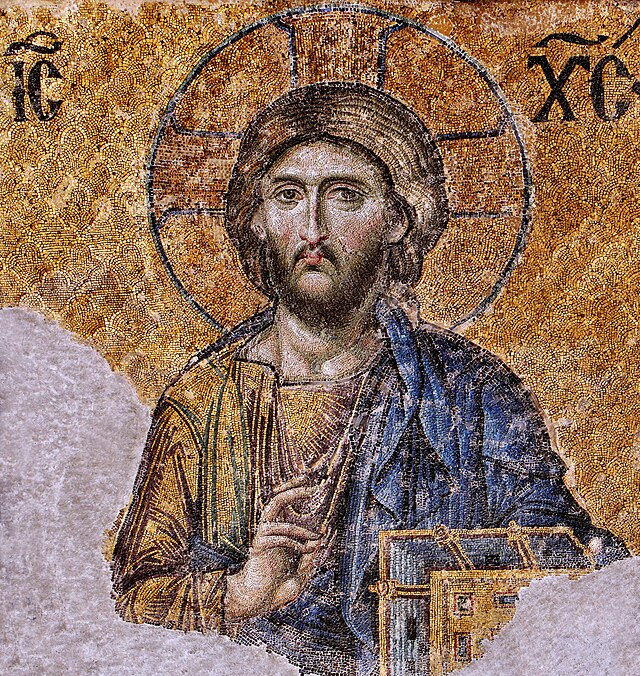
This is a bit of an oversimplification, but art from the Byzantine era was generally used to prime and convey religious texts. So the Eastern Roman Empire and the Christianization of Greek culture were particularly prevalent during this era. This era was all about mosaics, angular contours and focused on expression over form. As these pieces often held significant religious meaning, they would be reserved for churches, palaces etc. these mosaics would be ingrained in architecture designed to engage the viewers visually. The purpose of these pieces was often to tell a story from the bible. Although these pieces aren’t photorealistic, the story that they convey, the essence they evoke and are conveyed,
On the graph I’ll put it here.
(Somewhat realistic + narrative quadrant **note that its position will be more precise in the video)
This graph is based on contemporary standards. Although at the time, this was the most realistic and pretty much only piece of art available. One can argue that these pieces should be set at the origin because this is the first piece I’m graphing but considering what they had and the techniques available, it is hard to argue otherwise. With what is to come there I’ll put these pieces as being somewhat realistic.**
Romanesque
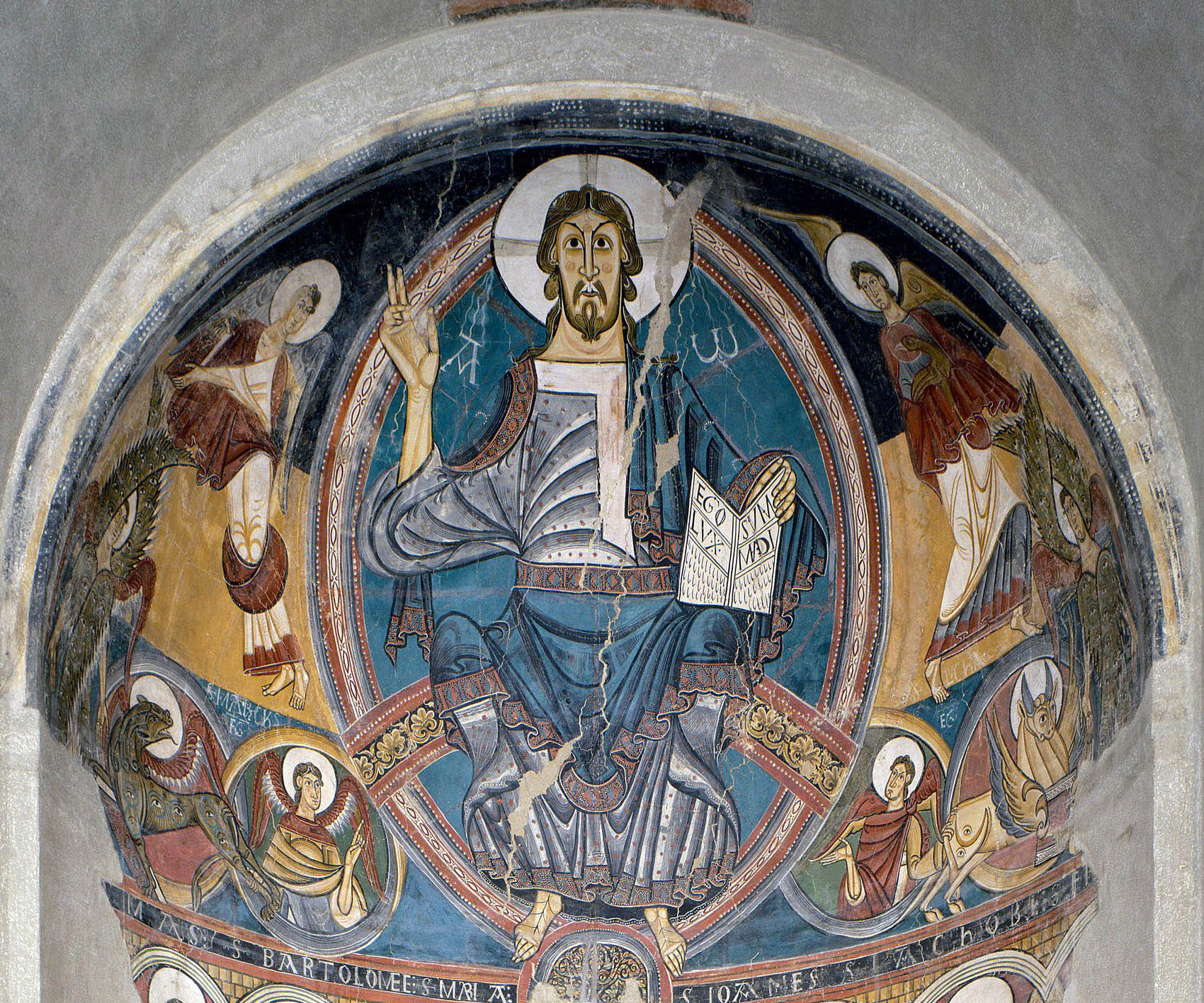
**The Romanesque era is where is basically a subset of the Byzantine era. Because many people couldn’t read (twitter), Christian ministers told the message of the bible using art. Art from this era focused on educating the populace of Christian objects, stories, ceremonies, deities, and saints. Romanesque paintings emphasize symbolism to convey a narrative - distorted faces and relative size emphasized emotion and expression over figure. This dates back to literal cave paintings but can be seen on your twitter (*X) feed (Modern equivalent of this are those political comics). In order to have an informed interpretation of these pieces, there would need to be some external knowledge that you would need.
It goes in the same quadrant as the art from the Byzantine era but more narratively driven - as there are more subjects, interplay, and symbolism within these pieces. Additionally, these pieces are less photorealistic as they focus on producing narratives over capturing their immediate environments.**
Gothic
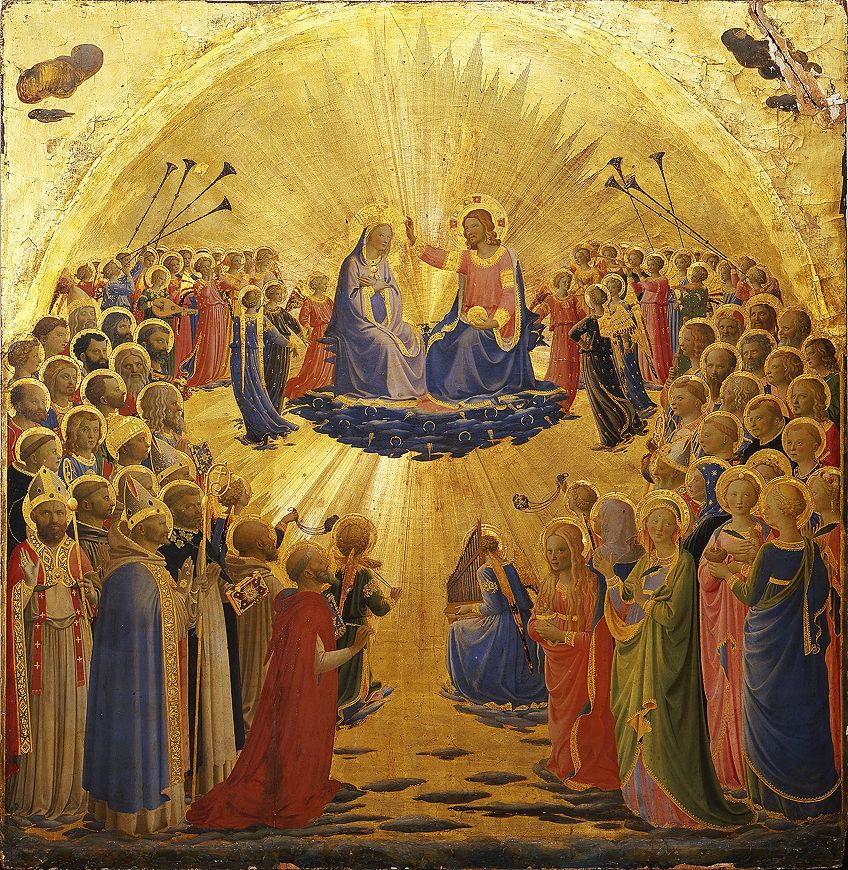
A common theme that you will quickly become aware of is that art movements not only are a response to the artists’ conditions but also the movements and eras that came before it. This is the first example of this as gothic art grew out of the Romanesque era. (TW France.) In France from 1140 to 1600, The world ending and the freedom that age brought was what defined this era. But as people got woke (existentialists) started to reject the reach of the church. And started to depict more realistic faces. Because people had thought that the world was ending and people’s declining faith in the church, they started posting their art everywhere. This expanded the reach of artists. This is around the time when art schools in France, Italy, Germany and throughout Europe began to develop.
Largely due to the advancements of painting techniques, art meant for the Christian church had become more realistic. Additionally, largely due to the influence of the Romanesque era, smaller figures such as people were depicted. With less emotional/abstract expressions as it was present in the Romanesque period. All the pieces until this point have all been similar in regard to telling a narrative. They are church centerpieces after all - not exactly something that would be hung in a brutalism mansion.
Renaissance
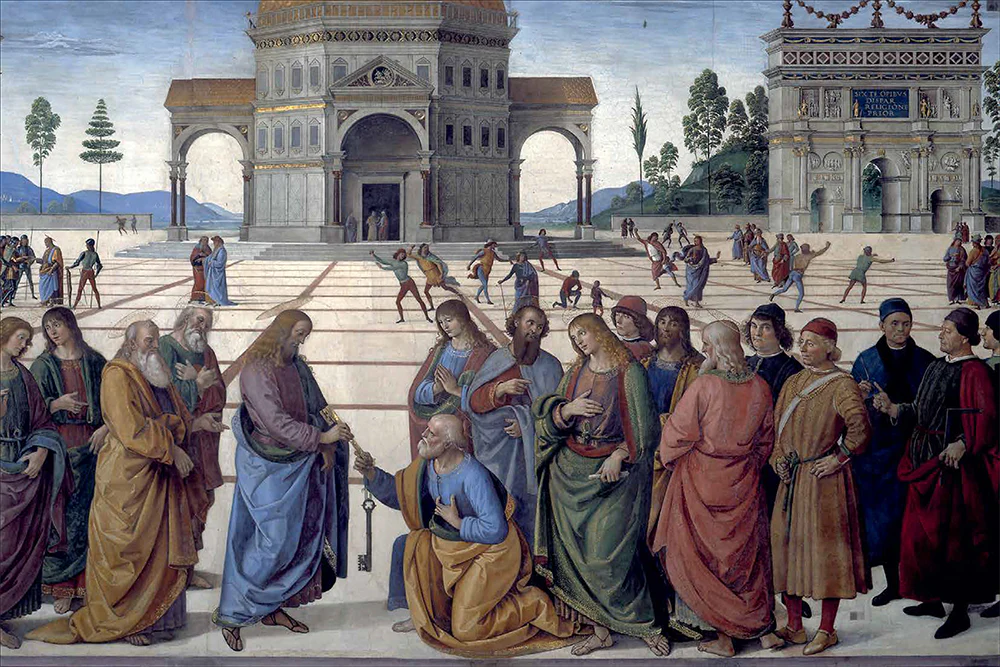
Instead of focusing on grandiose figures such as priests, and other Christian figures, the lens was turned towards the individual. And during this era patronage became quite popular: allowing an artist and their apprentices to worry about nothing but art. This is one key difference between great art then and now: the artist today is unable to flourish because such patronage does not exist. In such a neoliberal economy, the value of the art is more so attached to what I like to call metaesthetics: The art of selling art. This is typically done through advertising, networking and other means of creating an appearance of an apparence. This is not an inherently bad thing, but for those who would claim that modern art is lazy, this is a contributing reason. Back to The Renaissance, Artists such as Michelangelo and Leanardo da Vinci, would take their influence from ancient Greek and Roman culture, personalise it and use that alone to warrant their status as an artist. So I am being 100% serious when I say that these painter’s modern equivalents are furry artists on Twitter. The actual start of the renaissance is debated and a bit murky but it was generally the result of the rediscovery of Greek and Roman texts, the emergence of humanism, new ‘tech’, and the impacts of conflict and death. This doesn’t matter though, what matters is what people now think of this era. We have reached the zenith of human society, with the TMNTs (Leanardo da Vinci, Michelangelo, Donatello and Rapheal + landscapes), Sandro Botticelli and sculptors defining this period. These paintings and sculptures looked real. - Not like the ‘low effort, meaningless art’ of the past and future, these pieces are enlightening and are to be appreciated and not interpreted. If modern art is low effort then the 3 years spent to make Michalangelo’s David is what good art is. And if this is the pinnacle of human expression, whatever comes next would be an insult to the artists of this era.
**In all seriousness, people often call this era of art real art because of the attention to detail that had not been present before. It will make more sense as to the major flaw in this line of thinking when we compare this era to contemporary movements near the end of this video.
On the graph these pieces’ trademark is their realism and because they are inspired by classical Greek and Roman culture have some meaning behind them (in addition to the christian influence). They lack the political ‘umph’ and emotion of future movements but are nowhere near the level of ‘background painting’. They will go here.**
Mannerism
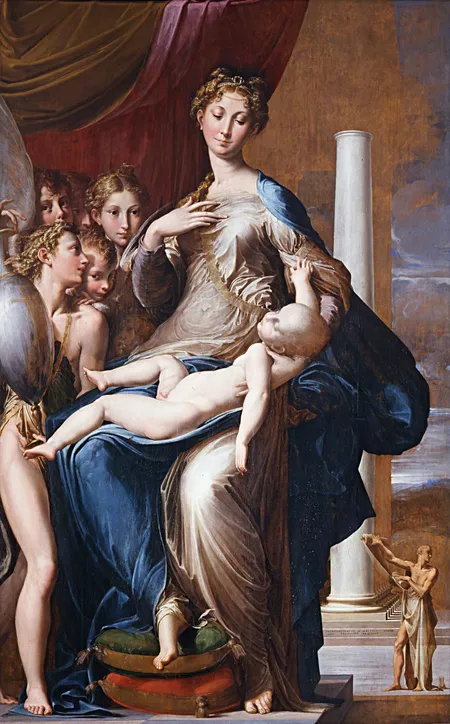
Mannerism in Baroque’s emo cousin and the renaissances’ grandchild. This era was the origin of kitsch. Like modern art* kitsch has two meanings, the principle meaning of kitsch was an overexpression. But in the modern day it has come to mean cheap, artificial and *modern. There was disdain for this movement because there is a narrative to these pieces, and aren’t meant to be merely appreciated.
These pieces are nearing photorealism and often tell a narrative and are highly expressive and creative. Although they were said to be void of any meaning and were a mockery of art, hundreds of years later we are here saying these pieces fall under the umbrella of real art.
Baroque
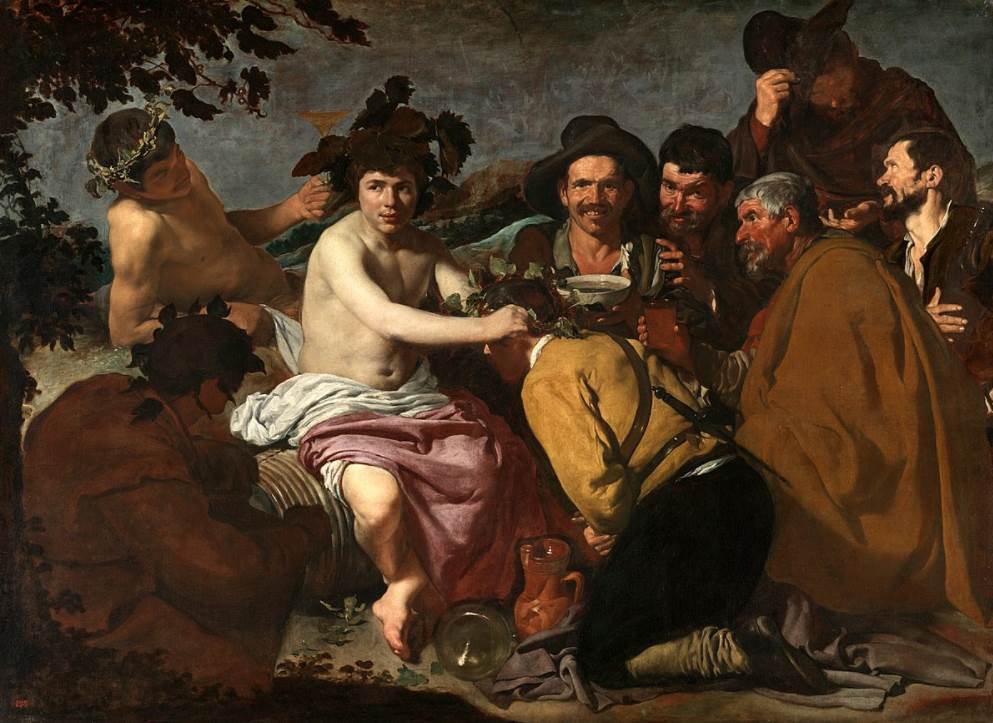
The Baroque era is when Kings, princes and priests would rather see themselves as powerful than the divine they were ‘so faithful to.’ Elements of mannerism are also present here as there is nothing to show off your power over peasants/ruling class like depicting yourself in a literally angelic light. These paintings are quite realistic. The reason why these pieces were good in the same way as the Renaissance is primarily because artists were trained and lived as apprentices for larger artists. The value of having a good artist to depict your likeness as a noble was in high demand. The better the portrait or painting (in regards to form, composition, realism etc.) the greater status the patron would have. This is where ‘good art’ became synonymous with good taste - upper class - better than you-esque pieces. The equivalent of people buying a superyacht or Twitter would be getting a portrait of yourself coming from the heavens. Fine art now had a strong connection with the ruling class.
The goal of these pieces was to take a ‘snapshot’ of their subject - with the tools that they had. For aristocracy who wanted to be depicted in a certain way - and have historically accurate (victor writes history) depictions it was up to the artist to make their subjects both literally and figuratively flattering. For these reasons art belongs here (here)
Rococo
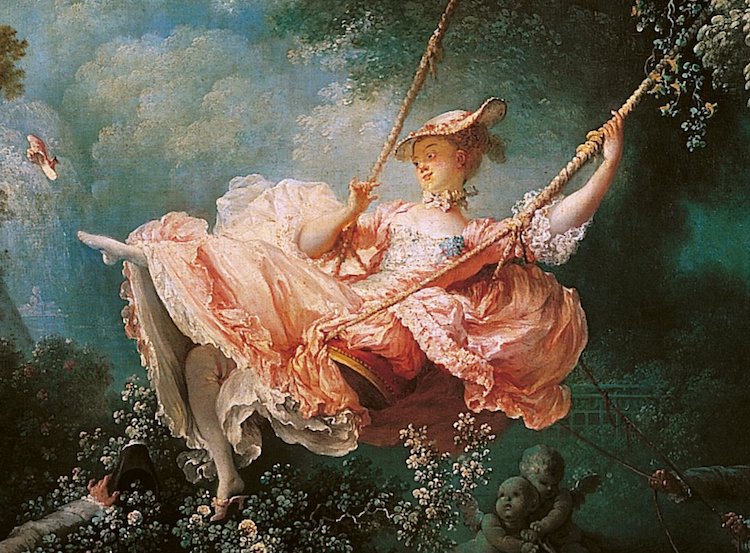
**The French are back at it again, and the kind, blameless bourgeoisie took inspiration from the Baroque era. The lighter composition focused very little on religious figures, instead, French aristocracy was not at all removed from social reality - living burdened by socio economic hardship. Also if these tortured souls had a shorter lifespan (i wonder why) than the average lifespan about 35 - they would want to be remembered in the most flattering light. This is especially true if you were royalty or something because after a while (16 generations) royal families started having strangely shorter lifespans (incest), they were often starving and often had no secure means of acquiring food. These pieces are characterised by smooth and light colours. Often in nature with a light air to them.
Because of the inherently self-glorifying nature of these pieces, they aren’t the most accurate depictions of these people. Highly imaginative on the artist’s part and showing aristocracy in a positive light is not the most realistic.
For what is to come, a famous painter, Goya, made pieces of aristocracy and often depicted the Bourgeoisie living the life - having fun - who can blame them - this can’t possibly go wrong - why do I smell cake?**
Modern Art
**This is where modern art started. Not the one you are likely thinking of - but what is technically (acktuchally) regarded as modern art. The reason as to why it ended will be explored in the next section. -but for the time being, modern art is anything that depicts things as they are emotionally. And is generally characterised by not having as strict form as the previous eras.
Before this era, form was relatively more ‘important’ whereas in this era the essence or emotion that a piece evokes is the focus. Either that or being visual aid for telling a narrative as the Romanesque and Byzantine had. Also the camera nerfed portraits and photorealism.
Until now because of the inherent glorification of the subjects has made them fundamentally untrue to their nature. Even when considering what that they were realistic to their standards. *** What constituted as realistic was largely in what the patrons of the artists would deem as ‘correct’ Also any human influence make a piece inherently subjective but it is no secret that aristocracy was living in lala land ’
But the hosh posh air about art finally began to shift and it is here where, in my opinion, true art begins. As art is a commentary of the status of humanity - checking the metaphorical pulse is better done in the hands of the people than the aristocrats and oligarchs. That’s not to say that these pieces are not impressive but they **were used as a status symbol and were meant to be looked at and not interpreted (French for boring). They are less prone to seeing their actions in a delusionally optimistic or self gratifying light ( - this will be text on the screen —that one guy on Big Think oml - I seriously hate this guy - he undermines the suffrages of minorities, aiding oppressors to ‘keep doing great things’ and basically says Pookie dw abt your fascist tendencies here is some statistic that pale in comparison to the sheer magnitude of bad you are doing) Depicting the everyday lives of people has a better chance of capturing the human condition - rather than indulging in the glorification of the subject. Art had everything to do with the ruling class and how they treated themselves but modern art expressed the consequences of their actions - anti-war pieces are the strongest tenant of this case but other examples will make a commentary on their lives. Although (Ignore frequency bias, fake memories and ‘objective importance of a subject’) In the eye of an artist, what they deemed or what the average person would deem to be important (rather than opulence, fame, and glory) made art more multifaceted and expressive.
With that said the first ‘modern’ movement**
Neoclassical
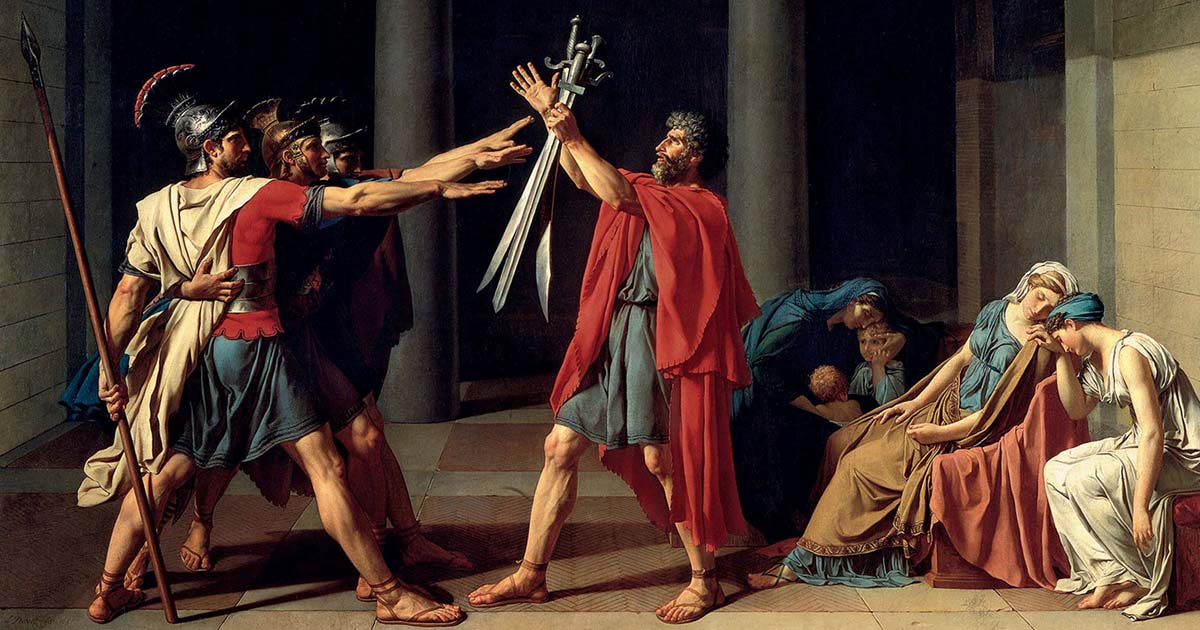
OK I lied this isn’t a modern art under any definition besides arguably chronologically - I wanted to include it in this section because this movement here to let you know that real art doesn’t go away especially when it is the favoured style of the ruling class. Also because it transitions into the other movements quite well.
So we are in France again (yay…) during 1770 - 1840. Transitioning from the Baroque era, Classicism or neoclassical art reverted styles and followed in the footsteps of Renaissance, kind of ignoring more recent movements in favour of more ‘serious’ art - that of the classic Greek and Roman art. I do believe that this extends to philosophy and other aspects of Greek/Roman culture but at least in the art of this era, rigid forms were prioritised.
Contributing reasons as to why these pieces look more realistic and true to form is partly due to the development of art schools, accessibility to new talent and new technologies (such as pigments). A common motif for this era is making art for the people. This was basically the OG Pinterest era. Also I wouldn’t be surprised if the lil gremlin (Napoleon) liked this style because it was traditional and was the dominant ‘correct’ art and rigid conformity adjectives.
As these pieces favoured form, and were more put a greater *self important, they displayed themselves closer to what they were not as they would prefer to be perceived as. When looking at The tennis court signing and the School of Athens piece you can see some similarities. Remnants of the increased sense of individuality, seen in the Gothic era (comparison) had started to inspire everyone to leave a mark. This era characterised the pinnacle of traditional art and the amalgamation of the history and optimization of technique.
If one era had to be chosen for what constitutes real art they likely mean this era if not the renaissance. Inspired similarly to the renaissance, this era takes influence from Greek/Roman culture and favours form while also having high emotion. Pieces such as The Death of Marat (Jacques-Louis David), Death of General Wife - Benjamin West and Oath of the Horatii - Jacques-Louis David (again) all are some of the most (compositionally) complex and technically impressive work. That is why I will be placing this era as very realistic but the most interesting/narratively compelling we have seen yet. The best of these pieces are the paragon of ‘real art’ if not just a bunch of people sitting in loose clothes.
Romanticism
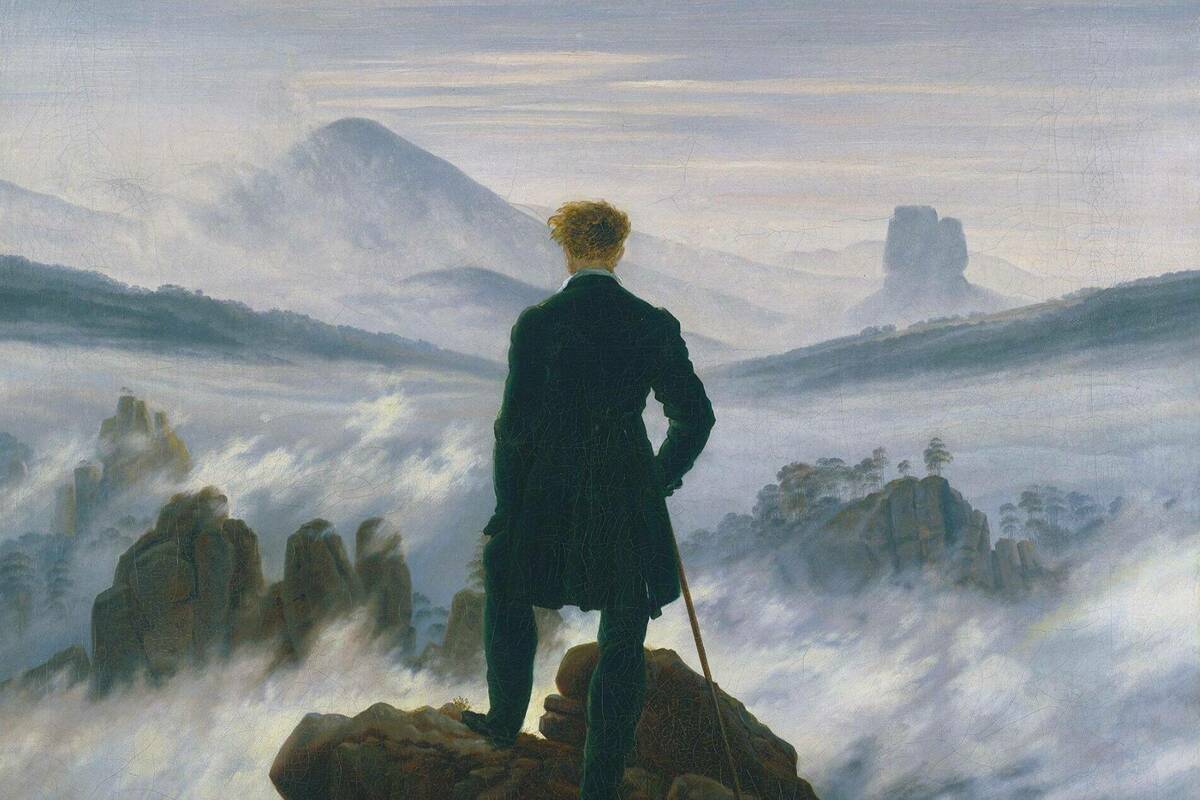
**Like previous movements, romanticism was a response to the rigid/stern style of classicalism. Romanticism occurred around the same time as the neoclassical era, (1790 - 1850). Art of the romantic era, aimed for a more emotional and narratively driven response. This era is known for its emotional and sentimental pieces which often would connect with nature. Because art of this movement is more subjective, there is not a consistent style of this era - rather it is more aptly defined by what neoclassical art is not.
Let’s check in on Goya… Oh wow.
Turns out that the Spanish occupation isn’t fun and making art that reflects what the average person is experiencing under these cuties, is all someone like Goya can really be doing. The glorification of war and power is closely tied to real art so naturally any to reject this association, painters would often have less rigid forms and convey a more pure essence.
Pieces of this era will go here. As they are more subjective and imaginative.**
Realism
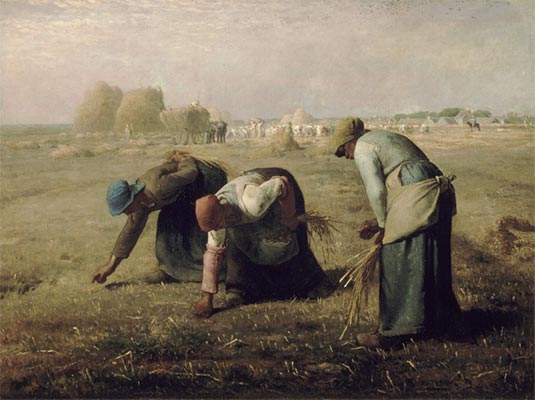
**In a response to romanticism, realism (1850 - 1925) took centre stage as the movement to challenge subjectivity. Whereas romantic paintings had a deep emotional origin, realism preferred objectivity. What differentiates this era (besides the time period) from the other realistic movements, realism depicts evil/common as well as good/noble. These artists aimed to depict the world as it was, rather than glorifying or making pieces with explicit emotion. Similarly to mannerism, a narrative can be drawn out from these kinds of pieces - in a similar way to how photos would bring back memories.
This era is often criticised for being too realistic - barely having artistic expression, and not favouring an ideal as neoclassical art has. As the name suggests it is the most realistic movement and objective movement. So it goes here.**
Impressionism
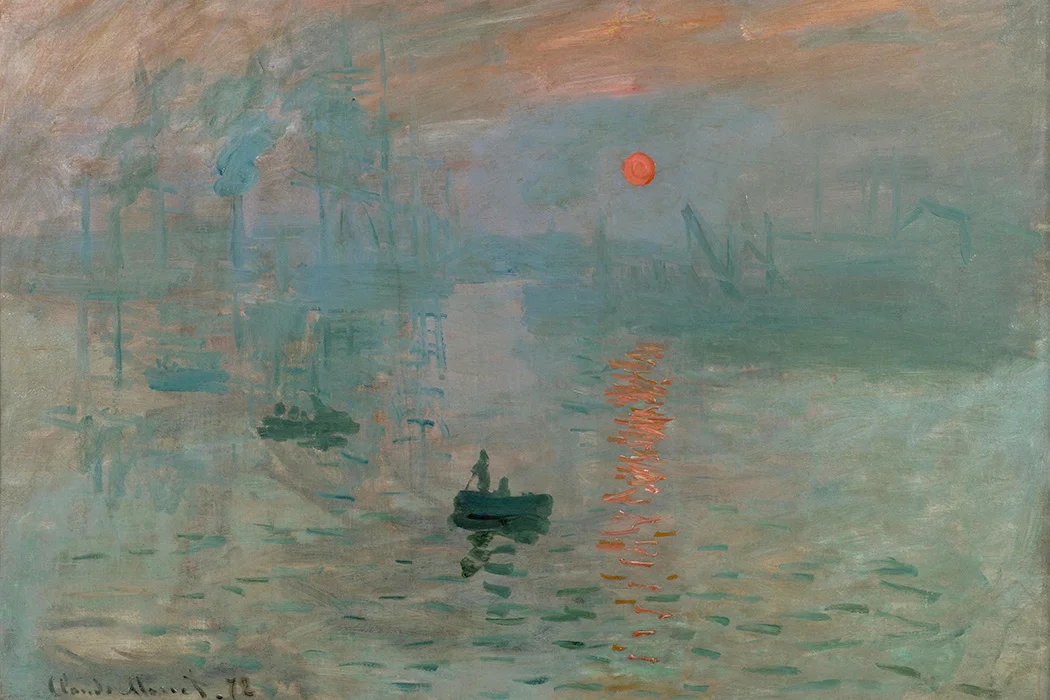
**Art historians often mark this era as the starting point of modern art as art of this era would start to more explicitly reject conventions.
Ironically enough, what is considered to be the first modern era, is said to tAke vEry lITtlE effort - when pointillism, which was created in this era, by far takes the most effort to take (from a technical standpoint). Impressionism was often not regarded as art as they didn’t use traditional techniques. As a consequence, impressionist artists preferred to create art for the sake of creating art - rather than as strictly as a career.
During this era it was not uncommon to see everyday people, picking up a brush and making art in their pastime. So it fits quite neatly into somewhat abstract and either narratively driven or simple. These pieces have a tendency to be more abstract than its predecessors but ultimately can be either narratively driven or simple - depending on the artist. So it goes here**
Symbolism
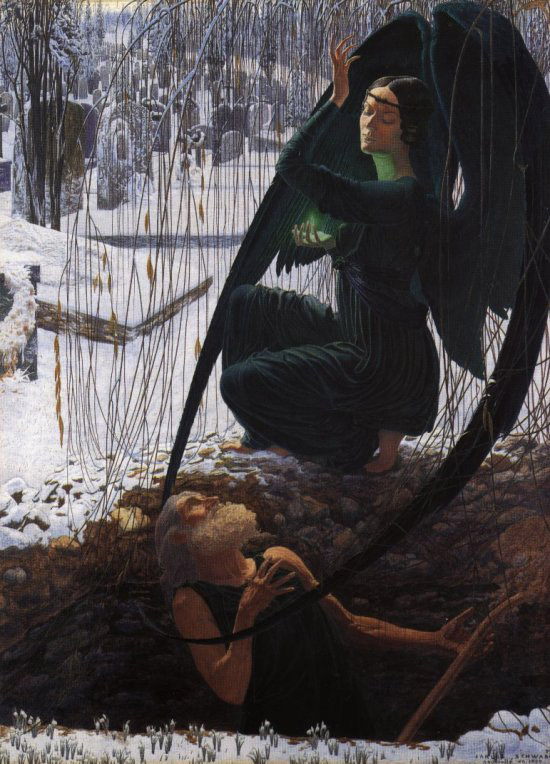
**In the late 19th century France (again…), Symbolism began to emerge in literature and influenced the art that came from this era. (It’s not that deep - for these people it was). In order to represent their emotion in a more raw essence, symbols and motifs within paintings would convey symbols such as death, disease, sin and passion. For the most part, pieces from this era had a more realistic form than that of the impressionist era. But generally are more metaphorical/narratively driven than the Baroque era for instance.
In regards to how ‘deep’ or ‘subjective’ these pieces are, they are more idealistic and metaphorical than baroque but less narratively driven than Romanesque/gothic pieces. I.e. you don’t need to be familiar with any subject matter to have an informed interpretation. These pieces are also quite realistic in form but take liberties when depicting the interaction of symbols and motifs with their main subjects**
Post-Impressionism

Emerging out of impressionism, post-impressionism rejects naturalism. Particularly in regards to colour and expression. This era is best known for embracing deep symbols and motifs rather than depicting just the impressions of nature. Famous artists of this time included Van Gogh, Paul Cezanne, Georges Seurat and Paul Gauguin. Although these artists had a tendency to work alone, their unique styles and techniques were adopted by more traditionalist painters.
Pieces from this era have a tendency to prioritise creative and underutilised painting techniques which adds a personal touch that is more noticeable within this era than that of say the renaissance era. For instance it is much easier to see the difference and individuality of Van Gogh and Cezanne than Michalengelo and Donetello
Art Nouveau/Secession
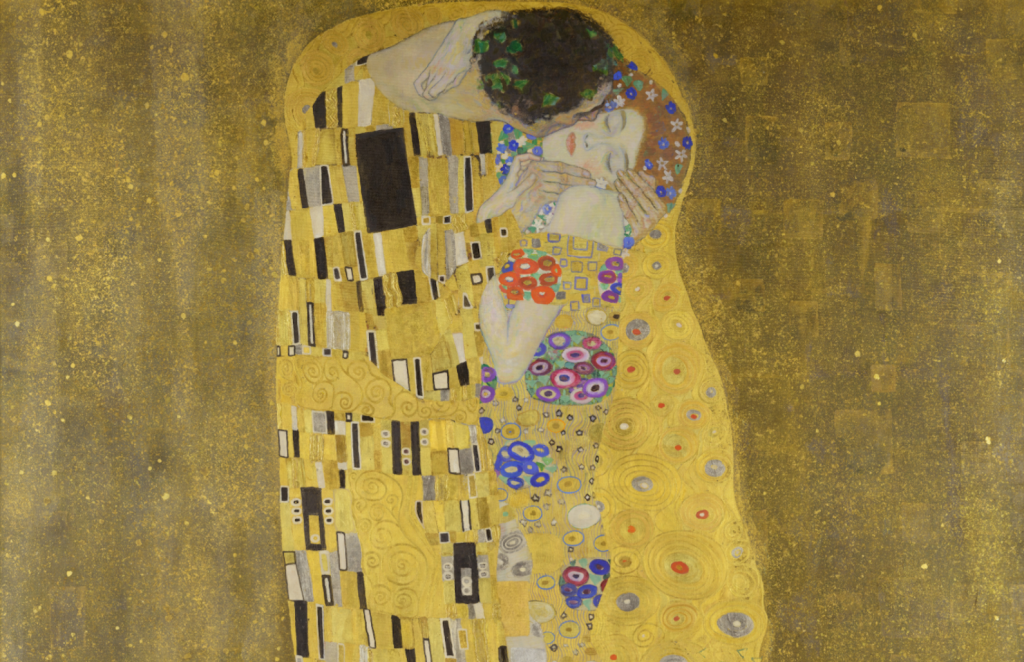
From 1890 - 1910 The art nouveau movement also known as the secession movement is characterised by its soft, smooth style, which would often be complemented with floral arrangements and moderately stylized portraiture. An artist that best encapsulates this movement, Gustav Klimt was best known for his contributions during this era. Other characteristics of these pieces included an emphasis on symmetry, playfulness and vitality of the subjects. Art nouveau also had political subtext behind many of their pieces. So there is often a story behind each piece. Rejecting social convention included the art style that these artists chose - so these pieces are both somewhat realistic and very emotionally charged.
Expressionism
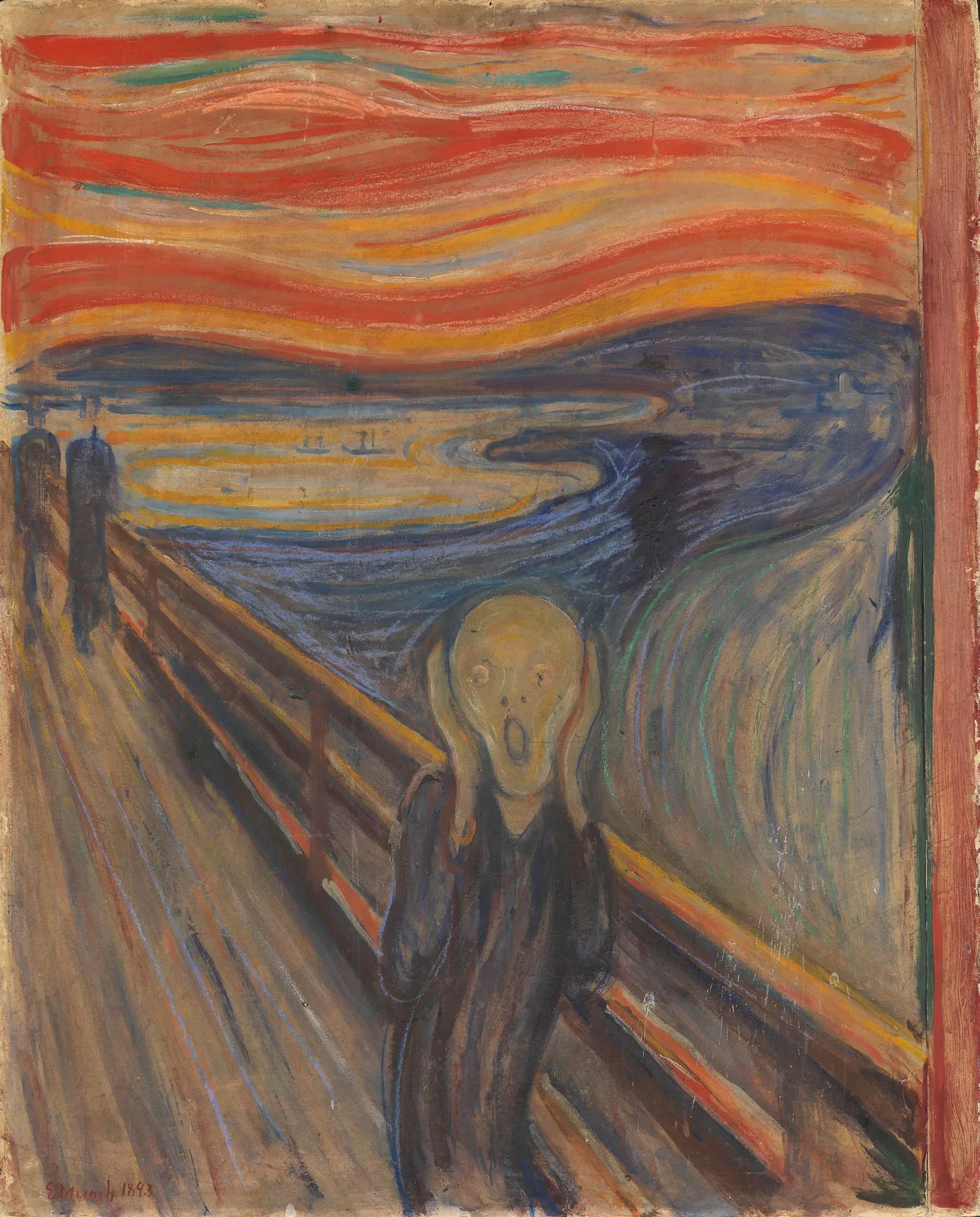
**From 1890 to 1914 The Expressionism movement placed high value on expressing subjectivity and emotion. Many artists at the turn of the 20th century, particularly in Germany, took issue with power structures of political parties and government. You will see a lot of emotionally charged anti-war pieces from this era. A critique of this era is that it is too abstract but those people likely are ignoring the background to these pieces - this was a time where nothing made sense - people were dying in millions and not seeing any merit to their sacrifice. This coupled with the visceral emotion tied to surviving war made these pieces all the less rigid when it came to form. They had a particular focus on capturing the senselessness and futility of war - why would they make pieces that were realistic and rigid to form?
Not all expressionist pieces related to war however, there still is a large emphasis on capturing the expression or essence of a subject. For those reasons it neatly fits here.**
Cubism
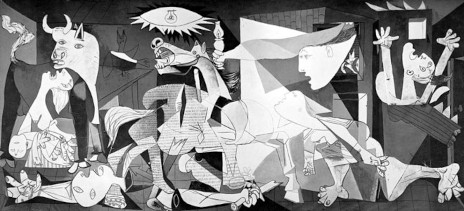
**The Cubism movement (1906 -1914) is characterised by breaking down forms, geometric and rigid shapes and the usage of the 3rd dimension. This is arguably the first modern style as the deconstruction of forms here is reminiscent of the ‘confusing’ nature of modern art. Pablo Picasso and Georges Barque were pioneers of this movement as the rejected traditional and realistic convention. This movement’s legacy is very prominent to this day - setting the tempo for deconstructing and simplifying forms. This was at a similar time to the expressionist movement and similarly had several anti-war pieces. Picasso’s Guernica is probably the most famous piece from this era and fits the overarching narrative of non conformity. So this movement will go here.
Futurism
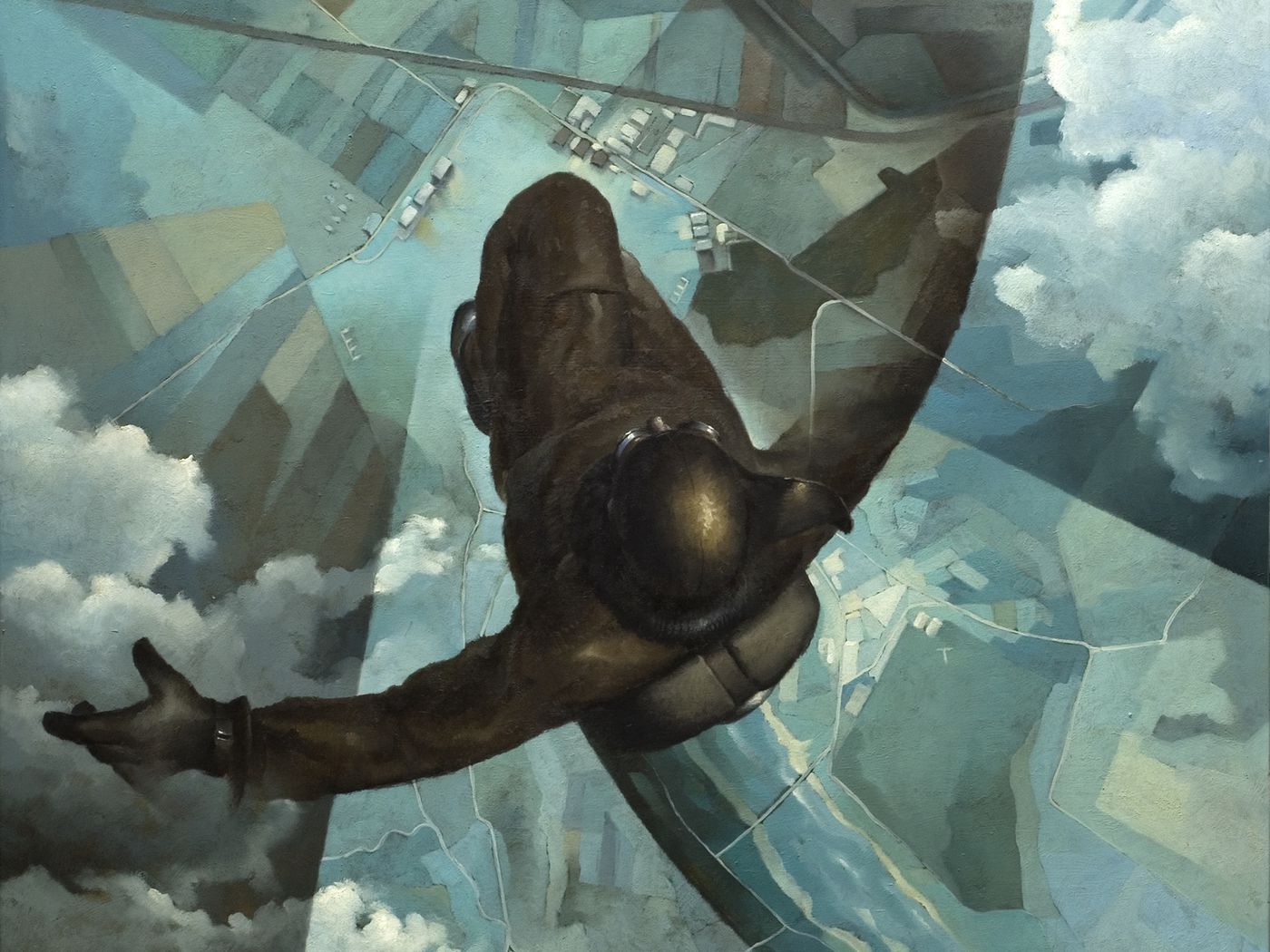
**Following in the footsteps of cubism, rejection and disdain towards the convention that Christian influence has had upon the populus, and authority/administration. Adhering to the political ideology, Futurism - as outlined in the Futurist Manifesto by Tommaso Marietti. Art had always been inherently political, but this movement was more so a political movement than an artistic one as it is characterised by its chaotic and aggressive style. In fact, Maretti wasn’t even a painter - and somehow became the most prominent figure of this movement. The otherness that comes with abstract art - is very much present in this era. Pieces here were meant to touch on the detriments of populism and fascism.
I personally, do not see how this strongly connects to facism. I suppose that the busy and maximalist themes within these pieces closely ties with the themes of facism. But its composition is also quite complex. Which goes against the adherence to one simple ideology - thought or wedge issue that Sorel touches on - would this be an insult to the institutions that upheld what ‘real art’ was or not. I personally can’t understand the meaning behind these pieces but because they have significant cultural influence, I will put them as having a somewhat objective or still interpretable air to them that gives them some space for extrapolation as I have made. In my opinion I like these pieces more for their technique than what they are trying to convey, so that is why I put them as being more objective/meant to be appreciated. As to how realistic these pieces are - figures can still be seen and aren’t quite as abstract as abstract expressionism would be.**
Dadaism

**What little form futurism had, was completely wiped away - form, rules, traditions - what everyone was claiming to be correct went out the window. Largely inspired by the illogical and nonsensical nature of war. Trench warfare inspired art that was conducive to their condition - what am I doing this for - do I even want to be here - do I care for my country this much? Were all sentiments that were common of all art from the early to mid 20th century- not only just within the Dada Movement but nearly all non traditionalist movements. Ultimately the dada movement represents the coalescence of social, cultural and subjective or non physical aspects of the human condition.
As such these pieces are very subjective and abstract. This would be the blueprint for modern art movements of the future as these pieces would come off as being kitsch - as in low effort, cheap and an insult to art. This is largely because dadaism was largely a resonance to capitalist values, rejecting bourgeois values and glorifiers of war. It is often branded as the ‘anti art’ as it is intentionally illogical and non-conforming to convention. On the graph ‘fine art’ - characterised by neoclassical art is the furthest thing from dadaism. The metaphorical pulse that I was referring to at the beginning of this video would suggest that people were not very trusting or happy with authority during this period of time.
These pieces if made today would be branded as *modern art if not already because they are intentionally devoid of meaning. What differentiates this era from *modern art is that these pieces are explicitly being anti-art whereas *Modern art often makes up meaning after the fact to appeal to authority. I like dada art because pieces would often frame mundane objects in a new light that adds to my personal view of said object and is potentially the ultimate ‘subjective’ art. Where the viewer ascribes their own equally acceptable meaning to the piece. In this way, dadaist art is very existentialist - allowing the everyday person to have their own interpretation of the piece. This combats the elitist air that comes with fine art - but because of its accessibility, entails its association with the middle and lower class.
This sentiment of intentional meaninglessness seems lost by several modern artists who would like to force a narrative behind their pieces and make them more marketable. This distinction will be elaborated on in a bit but ultimately, this era of art is one of the easiest to be reckoned with and imitated.**
Constructivism
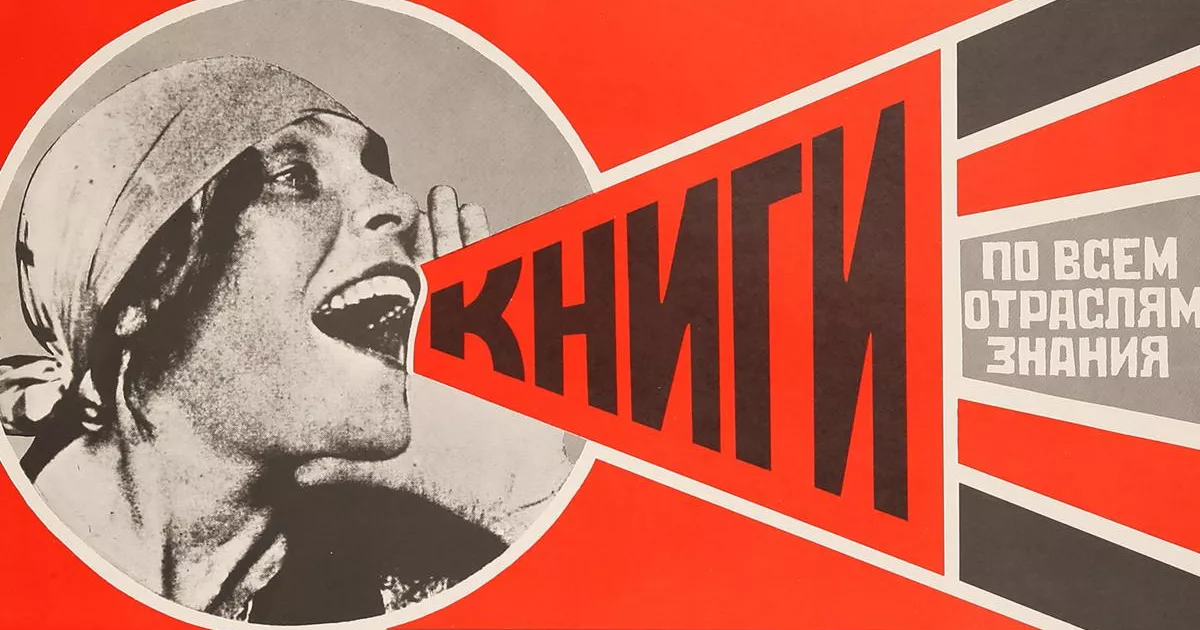
**Immediately after the Dada movement, Russian painters pioneered constructivism. From 1913 to 1930. (The awful Memphis style is the Walmart version of this). To this day the sentiment towards the arts in Russia and Ex-Soviet states, is largely positive, whereas in the West being an artist means that you will be poor, emotional and inferior to those working real jobs. You can thank the Cold War for giving artists that stereotype but this will become more apparent when we talk about Pollack in Abstract expressionism.
Art of this era had a goal of making the viewer engaged and actively interpreting these pieces. It is not coincidence that several constructive pieces are also political in nature - and lowkey propaganda. This era - because it was very good at conveying a narrative - would go on to inspiring graphical posters, modern typography, and propaganda/modern political pieces in its honour.**
The Harlem Renaissance
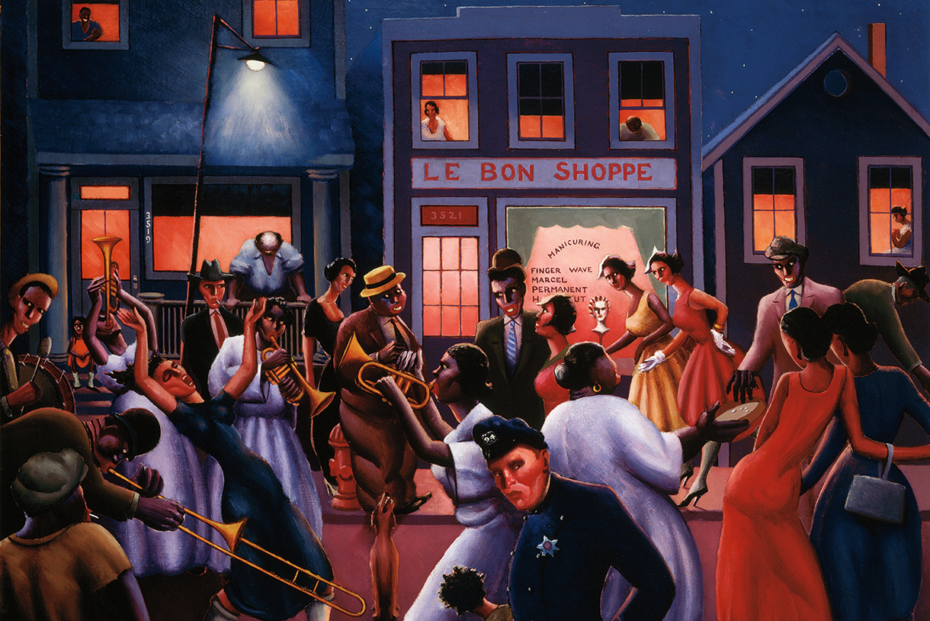
Because of the sheer scope of art - no longer being concentrated within Europe - what constitutes as western art has grown as Western influence has. And so around the same time as constructivism, dadaism and futurism were taking place, from 1920 to 1930, the Harlem Renaissance was the decade where African American literature and art were starting to be recognized. Also referred to as the New Negro Movement, art that expressed the Black perspective and was often ignored from Western scholars were being formally recognized here. Although it originated in Harlem, NY, US it went on to help inspire the rest of the US. - Especially during the civil rights movement of the 1950s.
The very obvious racist sentiment towards art created by black people compounded the relationship that art that wasn’t photorealistic was lower class. This is seen in the modern age, as a piece that takes inspiration from this era went on to be sold as one of the most expensive in history. This will be discussed after the next few movements but for the time being, the movement will be placed here.
Surrealism
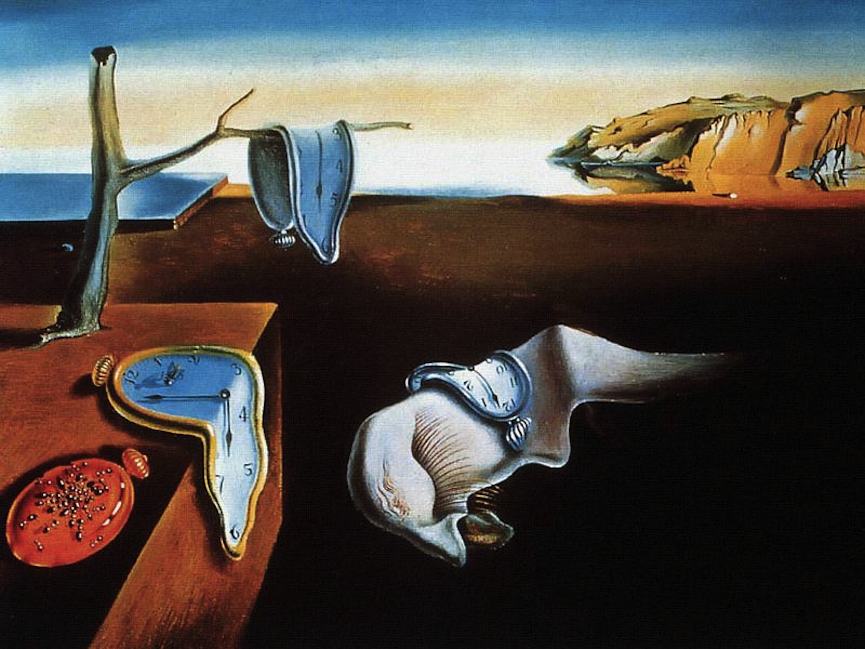
During the same period as the Harlem Renaissance, 1920-1930, Surrealism took the pure illogical nature of Dadaism and tried to paint uncomfortable and intentionally disorienting or confusing subjects. They would often draw from their dreams and try to express their aspects of their subconsciousness by painting from dreams. Psychoanalysis was really popular rn. Surrealism often directly opposed widely held beliefs and ideologies because of this - like other expressive pieces - was not taken seriously. This style, as you can likely already tell, has had a great influence on modern art.

It takes the illogical characteristic of dadaism and streamlines the interpretation so the average person can interpret each piece while also having a narrative behind it. * Again - during this period of time several artists made political pieces that reflected that the working class was not super happy. The artist that had the technical skill to depict realistic art used their skill to make art that sometimes intentionally insulted authority. In my opinion these pieces strike the perfect balance between interpretation and objectivity, abstract and photorealistic. Consequently I put this at the origin.
New Objectivity
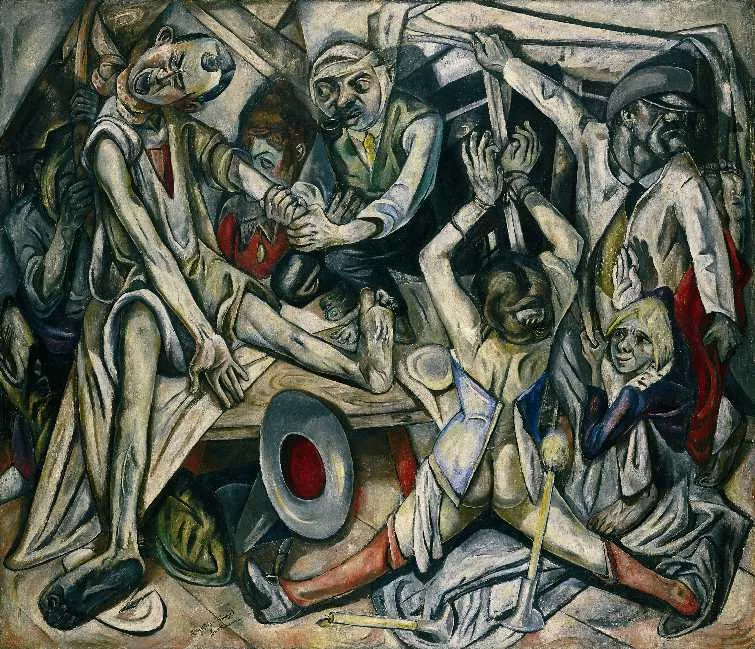
The next major movement after the 1920s/30s was the new objectivity movement - starting in 1925 til the 1960s. It was largely there to challenge expressionism and return to an unsentimental - objective reality, condemning the romantic, subjective and abstract characteristics of art prevalent at the time was led by Otto Dix, George Grosz and MaxBeckmann. Originating in Germany, Neue Sachlichkeit can be translated as New Objectivity, matter of factness or sobriety. What was objective was often their turmoil and grew tired of romanticising their experiences in the “twilight of humanity” ; it was paramount to depict their environments and people as they were. Similar to the last previous movements these pieces are largely political and socially critical. The instability that war had wrought upon the working class left many in search of some kind of order. An order that artists wound found in New Objectivity. - Solemn, technical, unemotional - in other words objective characterised this style. The subjects were often everyday objects such as light bulbs, and radios.
Because this era has disdain towards expressionism and favours objectivity, these pieces will be put at the same height as realism, but for how abstract it is, it is slightly more abstract than that of surrealism.
Abstract Expressionism
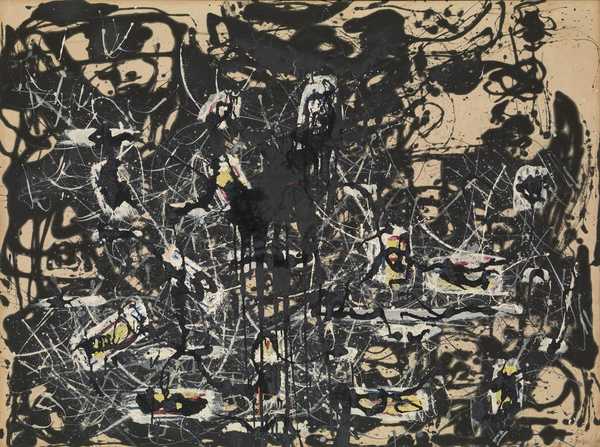
During the 1950s to 60s, many American painters such as Mark Tobey, and Jackson Pollock started to embrace abstract means of expressing emotion. Painters would literally drop buckets of paint on a canvas and use their fingers as brushes. These pieces were often so thick with acrylic paint that they would look VERY - different -
**Pollock embodied the entirety of this movement so for abstract expressionism I’ll be going through why he became popular in the first place. During the 1940s, Pollock was a left wing painter that somehow received the support of the CIA. America during the 1940s, enjoying the spoils of WW2 and continuing mass production, hated abstract art - such as the art found in expressionism and works by Picasso. What is even more confusing as to why the CIA supported Pollock is the fact that Pollock was very openly a leftist. As such he was suspected of having ties with the USSR - and during the Mccarthy era - it wasn’t the best time to oppose the American government.
Real painters at the time made paintings that were heavily borrowed from European techniques. The anti-establishment aspect of this movement was overlooked by the CIA and weaponized to combat socialism/communism. Primarily because abstract expressionism was the first significant (white) art movement that was fully American. Being an individualist and free movement to combat the homogenous, mass-produced and boring realistic pieces that came from. During Stalin’s rule, there was even a subcategory of realism, socialist realism that would be characterised as the antithesis of American values. When coupled with the origins of constructivism coming from what is now Russia, it is no surprise that messaging through art was a selling point for the propaganda that came out of it.
So in response to this, the CIA pushed to make their own form of propaganda to promote American values. Because these pieces are very individualistic and emotional they became the experience itself. Despite Pollock being a leftist his paintings would become part of a larger narrative that feeds into American exceptionalism. And because these pieces are very open to interpretation - they could be haphazardly ascribed to these pieces (which would often push American values.) Before they could do this however they had to separate the communist artist from their pieces. Additionally the Congress for Cultural Freedom had the express purpose of connecting the art world of New York and American Propaganda.
It was not uncommon for pieces to be bought by high status rich men who would support fightin’ the commies by making a foundation and plastering their name all over it. And if you see your favourite influencer funnelling crypto - you are far more likely to buy into the opinions of the powerful. What is crazy about this movement is that leftist artists would be anonymously bought out - their art shown in galleries while having anti-communist anti-leftist Pro-Ameircian messaging that wasn’t even part of the piece. President at the time, Eisenhower was not remotely interested in fostering the creative process - he was fixated on victory over the USSR. He weaponized this movement to advocate against leftist Euopeans and the USSR who both believed that America had no culture. Only to turn around to say that the several shortcomings of the American people stemmed from modern art. This sentiment is present to this day with Who’s Afraid of Red Yellow and Blue? I swear America makes 0 sense.
The legitimately moving and progressive techniques and style of this time were politicised and ascribed value from the elites. The entire concept of providing a metaphysical experience comes from this movement such as … were completely. But there hasn’t been a time that art had not been tied to politics (Caravaggio, Jacques Louis Davids and the entire ‘real art’ )
Does this at all sound familiar? - Because of its retroactively poisoned meaning it goes here. But before the wider discussion, I’ll briefly touch on the final movement that will be covered, Pop art.**
Pop Art
Abstract expressionism set the precedent on how art can be weaponized and utilised for neo-aristocratic gain. Another aspect of why Modern art is demonised is partly due to this movement. The everything is art mentality of this era was what defined it as toothpaste, trash and tin cans were often the subjects of pieces from this era. *Also painting and graphic art were influenced by printing technologies and actual cameras. This era is responsible for a lot of modern art …Memphis… This movement helped art become more closely tied to corporate advertisement. In fact it is the precursor to highly marketable - advertiser friendly art. Now that art could be mass produced, and commodified, it took a back seat. I didn’t want to go too in depth on this but the link between superficial and forced meaning was and still is very alive. (Not to say that pop art was devoid of meaning - it is just that similarly to the dada movement, it sometimes doesn’t have an explicit purpose. Except for comics I love comics <3)
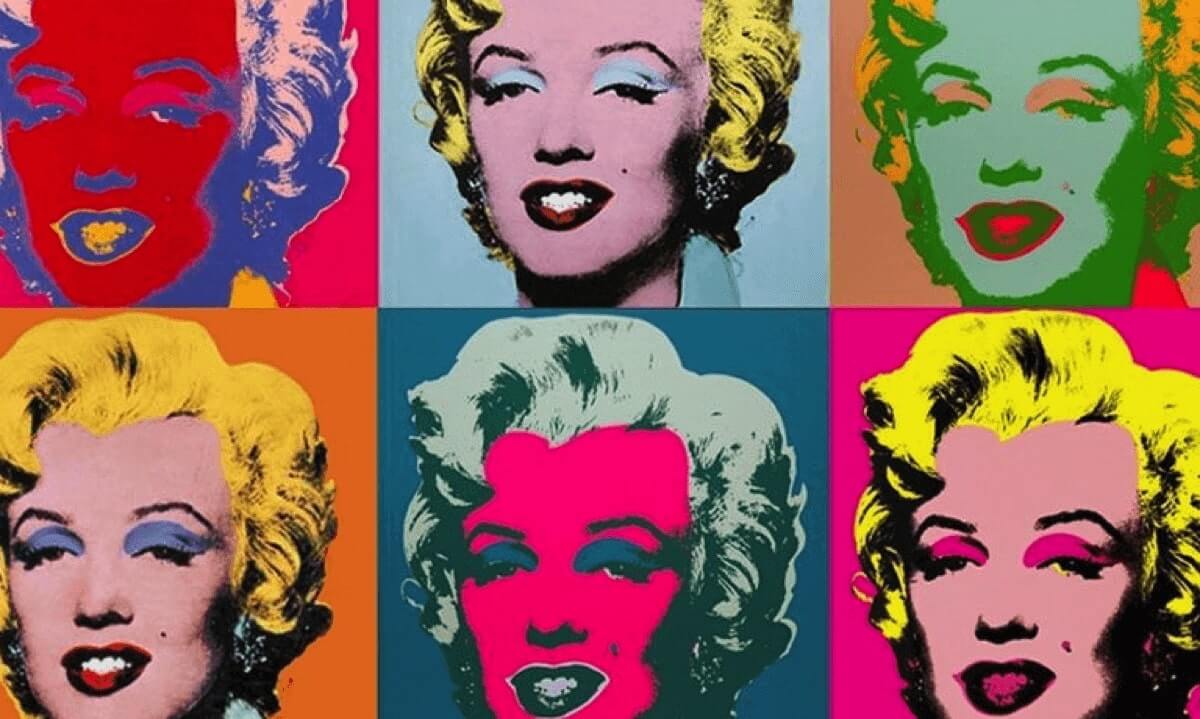
Because there are not really art movements anymore see Postmodern art